
Replacing an Existing System
AC Replacement in Saint Johns, FL
When an aging air conditioner is costing more to keep alive than it's worth, replacement becomes worth exploring. Here's how homeowners typically approach that decision.
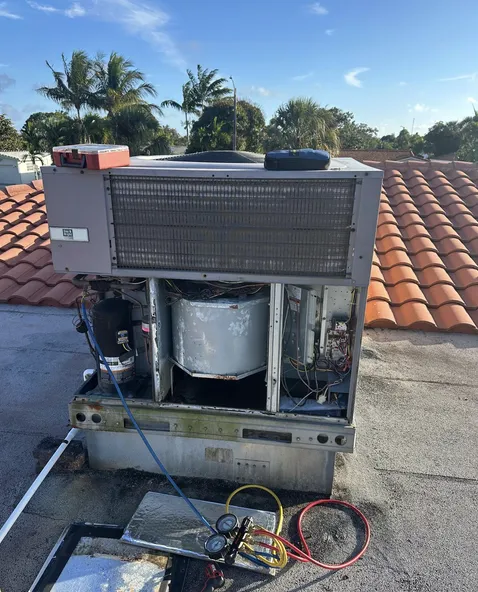
AC replacement is a different decision than repair. Instead of fixing one failed part, replacement means retiring the existing system — condenser, coil, and sometimes air handler — and installing new equipment matched to your home. For Saint Johns homeowners running cooling nearly year-round, this is usually a decision made after weighing age, repair history, and comfort complaints rather than a single failure.
Why homeowners consider replacement
Several patterns typically prompt a homeowner to start looking at replacement rather than another repair: the system is roughly 12–15+ years old, it has needed several repairs in the past couple of cooling seasons, energy bills have crept upward without an obvious cause, or the home struggles with uneven cooling between floors even after previous fixes. A system that keeps running constantly without reaching the set temperature is another common signal that the equipment may be undersized, worn out, or simply reaching the end of its useful life.
Repair vs. replacement: how the decision gets made
There's rarely a single rule that applies to every home. A rough guideline many homeowners use is comparing the cost of a repair against the age and remaining expected life of the system — if a major component like the compressor is failing on an older unit, replacement often becomes the more reasonable path forward. Our repair vs. replacement guide goes into more detail on this comparison, including how refrigerant type factors into the math for older R-22 systems.
Matching equipment to your home
Replacement isn't just swapping in a similar-looking box outside. The outdoor condenser, indoor coil, and air handler or furnace need to work together as a matched system for efficiency and reliability to hold up over time. During evaluation, the existing ductwork, insulation, and home layout are typically reviewed as well, since a new system performs best when the surrounding infrastructure can support it. Two-story homes common in neighborhoods like Aberdeen and Twin Creeks sometimes benefit from equipment sized and configured differently than a single-story layout with the same square footage.
The refrigerant transition
Many systems installed years ago used R-22 refrigerant. U.S. production and import of new R-22 ended in 2020, though existing systems can still be serviced with recovered, reclaimed or previously produced R-22. If your current system uses an older refrigerant, that alone can be a significant factor in the replacement conversation, since replacement parts and refrigerant for those systems have become harder to source and more expensive over time. Newer systems use more current refrigerants, which is part of what gets reviewed when comparing your options.
What happens to the old equipment
Removing and properly handling the old outdoor unit, indoor coil, and any remaining refrigerant is part of a replacement project. This is planned out as part of scoping the job so the old equipment doesn't become a leftover problem in your side yard or garage.
What the evaluation process looks like
An evaluation for replacement typically includes a look at your current equipment's age and condition, a conversation about your home's cooling history (including any rooms that never seem to cool well or a history of frozen coils), a check of the ductwork and air handler location, and a discussion of what you want from a new system — quieter operation, better humidity control, or simply reliability during the Florida cooling season.
Saint Johns and 32259 considerations
Homes in Saint Johns run cooling for a long season each year, which means equipment here works harder and longer than in milder climates. That extended runtime is part of why local homeowners often see replacement conversations arise a bit earlier than the textbook 15-year mark. Newer construction along CR-210 and St Johns Parkway also tends to have more consistent ductwork, which can make matching new equipment more straightforward than in older housing stock.
Frequently Asked Questions
How do I know if I need replacement instead of another repair?
Age, repair frequency, refrigerant type, and rising energy bills all factor in. Our repair-vs-replacement guide walks through the tradeoffs in more depth.
Can I replace just the outdoor unit and keep the indoor coil?
Sometimes, but mismatched components can hurt efficiency and reliability. Matching the full system is usually reviewed during evaluation.
What happens to my old refrigerant during replacement?
Refrigerant must be recovered by a qualified technician before old equipment is removed, which is one reason replacement projects are scoped individually.
Will a new system fit my existing ductwork?
Existing ducts are often reused, but their condition and sizing are typically reviewed as part of a replacement to confirm compatibility.
How long does a typical replacement take?
Many single-system replacements are completed within a day, though home layout, attic access, and equipment type can affect timing.
Is a bigger system always better for a Florida home?
No — oversized equipment can short-cycle and struggle with humidity control. Sizing is based on your home's cooling load, not just square footage.
Weighing repair vs. replacement?
Describe your system's history and the appropriate next step can be arranged.
Last updated: August 30, 2026. Content is created to help Saint Johns homeowners understand what factors into an AC replacement decision. Reviewed for clarity by the Honest HVAC & AC Repair of St. Johns Editorial Team.